This post may contain affiliate links. Please read our disclosure policy.
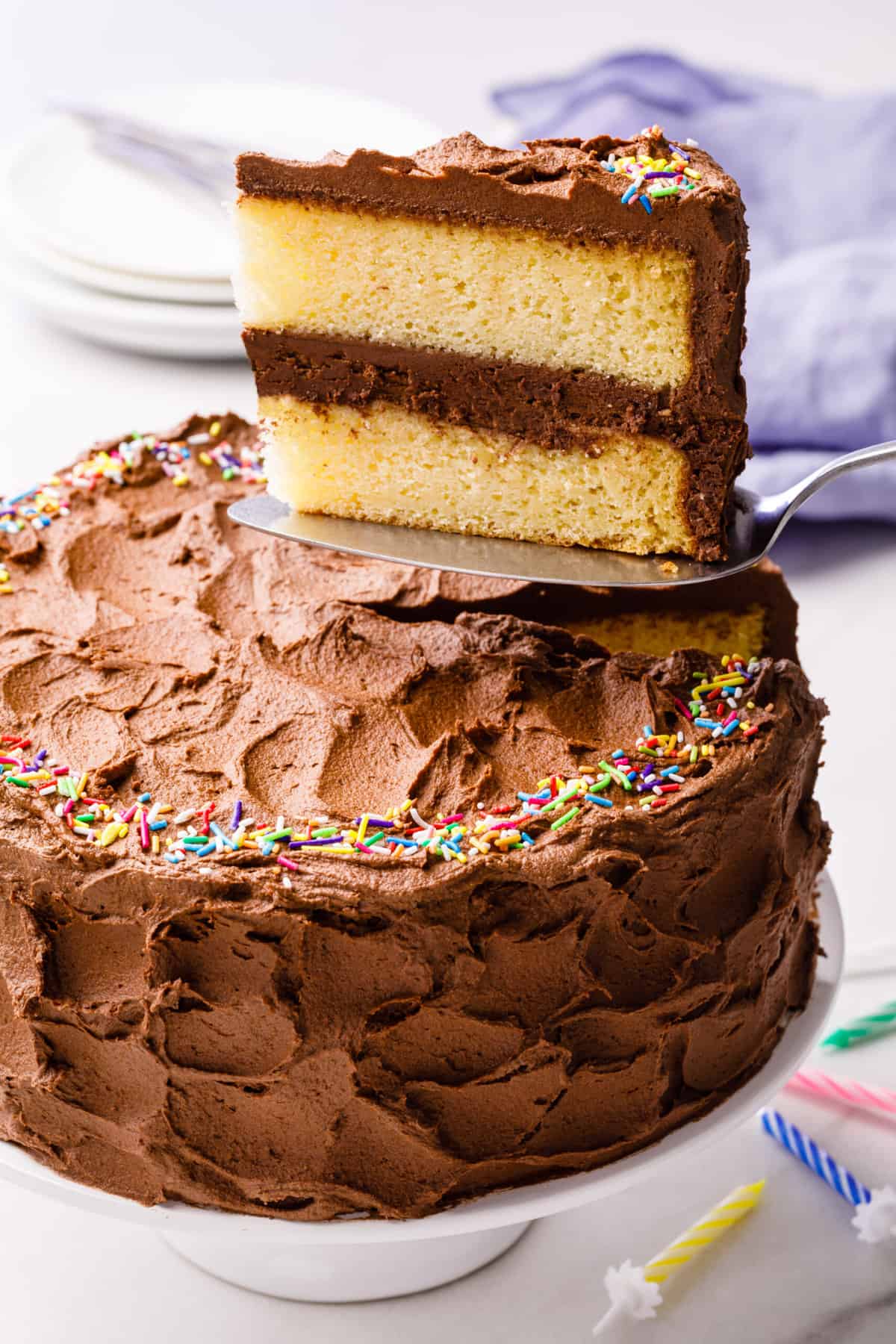
Learn how to bake a cake from scratch or dress up a box cake, with the best tips on how to make your homemade cake taste amazing each and every time!
Whether you want to learn how to bake a cake from scratch, dress up a box cake, or try your hand at cake mix poke cake recipes, I’m sharing all my favorite pointers on how to make your homemade cake taste like it came from a bakery.
Why you’ll can trust these cake baking tips!
I’ve been baking cakes for my family for over 17 years, and I can tell you the difference between a dry, dense cake and a bakery-style one almost always comes down to technique, not talent.
The steps below walk you through the whole process — prepping your pans, mixing the batter the right way, knowing exactly when your cake is done, and cooling it so it’s ready to frost.
Table of Contents
- Why you’ll can trust these cake baking tips!
- What You’ll Need
- Step 1: Prep Your Pans
- Step 2: Preheat the Oven (Really)
- Step 3: Measure Your Ingredients Properly
- Step 4: Bring Everything to Room Temperature
- Step 5: Cream the Butter and Sugar
- Step 6: Combine Wet and Dry — Without Overmixing
- Step 7: Bake — and Know When Your Cake Is Done
- Step 8: Cool the Cake
- Step 9: Frost and Decorate
- Troubleshooting Common Cake Problems
- Frequently Asked Questions
- Start With These Easy Cake Recipes
- More Baking Tips You’ll Love
What You’ll Need
You don’t need fancy equipment to bake a great cake, but a few basics make everything easier:
- Cake pans — two 8- or 9-inch round pans for layer cakes, or a 9×13 for sheet cakes
- Parchment paper — for clean release every time
- Measuring cup with a spout for wet ingredients, flat-rim cups for dry, and measuring spoons for both
- Stand mixer or hand mixer — for properly creamed butter and sugar
- Silicone spatula — for folding without overmixing
- Wire cooling rack — so the bottom doesn’t get soggy
Step 1: Prep Your Pans
One mistake I see time and time again is not lining the pan. For clean removal every time, trace the bottom of your pan on parchment paper, cut it to fit, and lay it in the bottom. Then coat the sides and bottom with butter, sprinkle with flour, rotate the pan so every surface is coated, and tap out the excess.
Chocolate cake tip: dust the pan with cocoa powder instead of flour — no white streaks on your finished cake.
Step 2: Preheat the Oven (Really)
Turn the oven on before you start mixing — most cakes bake at 350°F, and batter that sits while the oven heats loses the air you just worked into it. If your cakes always seem to run over or under the recipe’s time, an inexpensive oven thermometer will tell you whether your oven actually runs at the temperature it claims.
Step 3: Measure Your Ingredients Properly
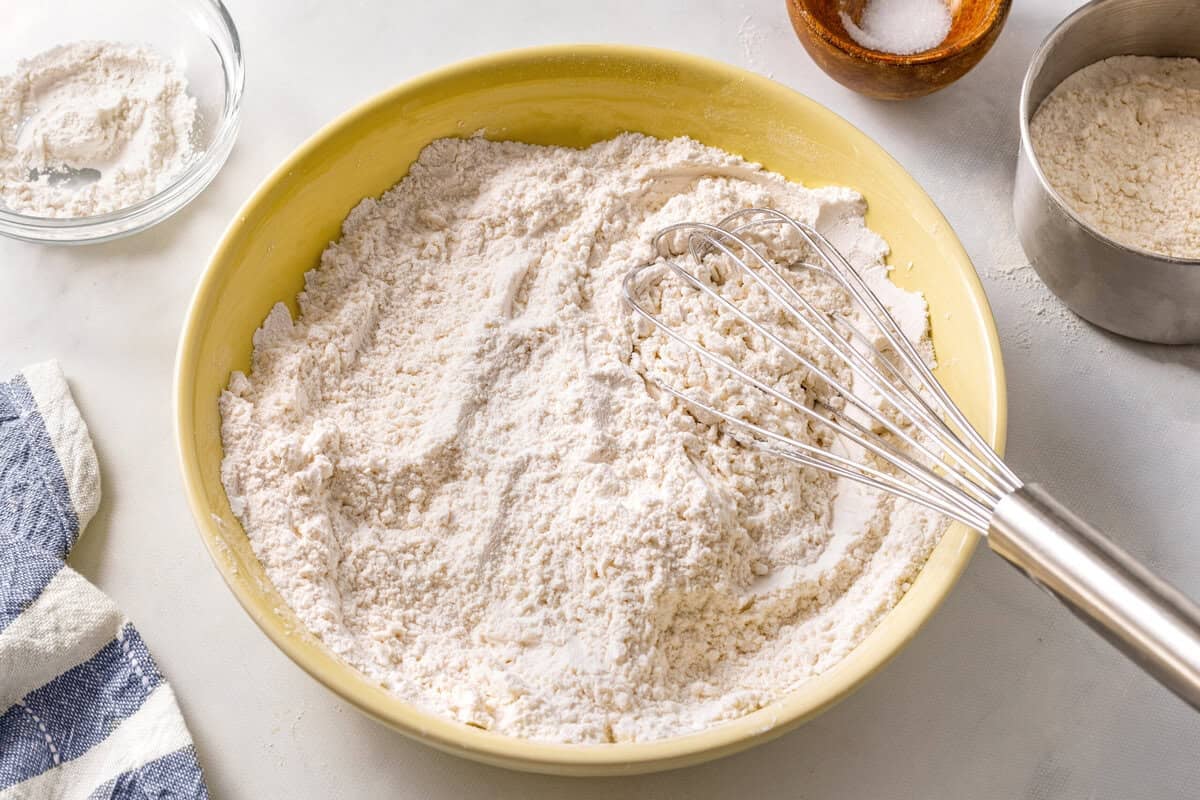
Baking is precise — measure properly and you’ll get a light, moist cake; eyeball it and you can end up with something flat, dense, or dry. Use spouted cups for wet ingredients, flat-rim cups leveled off with a knife for dry, and measuring spoons for both.
Two details that matter more than people think: if a recipe calls for a large egg, use a large egg — swapping sizes changes the recipe. And spoon flour into your measuring cup rather than scooping, which packs in extra flour.
Need conversions? Here’s how many cups in a quart, pint, or gallon — and if your recipe calls for it, how to make self-rising flour.
Step 4: Bring Everything to Room Temperature
Room temperature ingredients are the secret to a light, even crumb. Set your butter and eggs on the counter about 30 minutes before you bake. Don’t melt butter in the microwave to rush it — softened and melted behave completely differently in batter, and cold eggs can leave your cake with an off, dense texture.
Step 5: Cream the Butter and Sugar
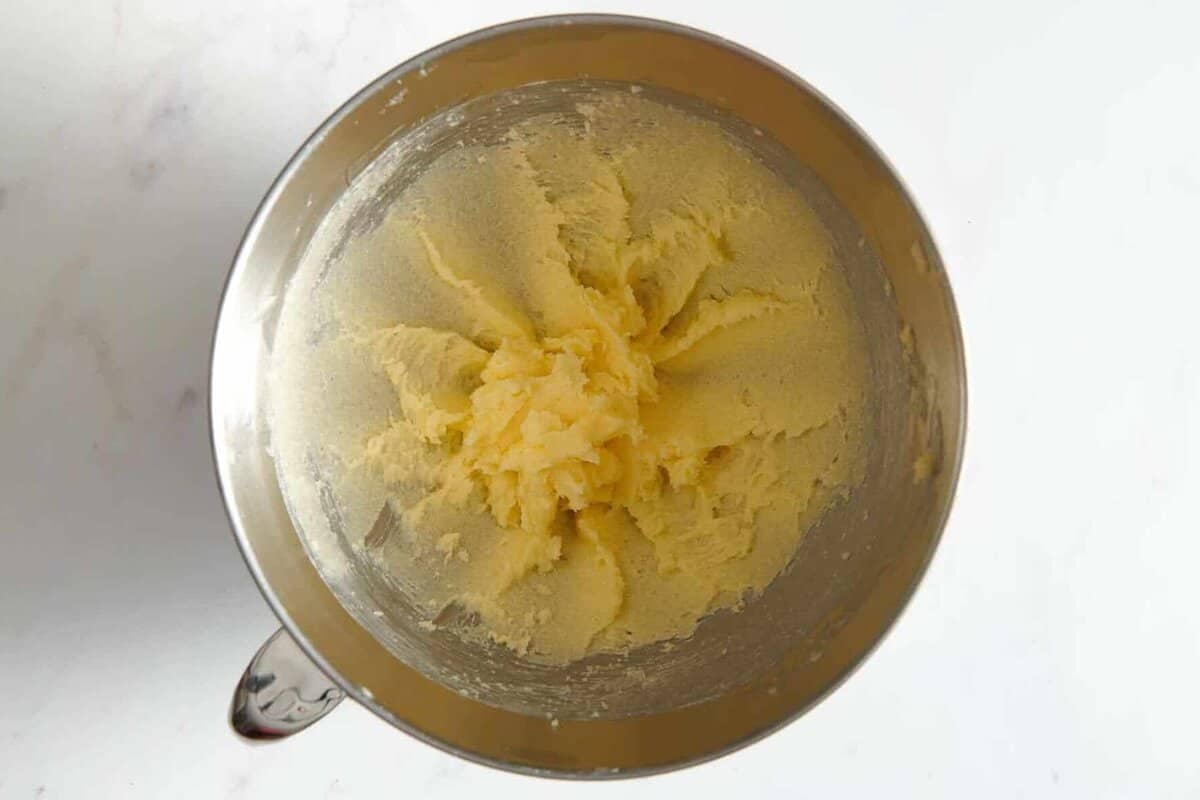
This is where a fluffy cake is made. Beat the softened butter and sugar together on medium speed with the paddle attachment for a full 3–5 minutes, until the mixture is pale and fluffy. It takes longer than you’d expect — what you’re really doing is whipping air into the batter, and that air is what lifts your cake.
Step 6: Combine Wet and Dry — Without Overmixing
Add your dry ingredients to the wet gradually, and stop as soon as the flour disappears. Overmixing develops gluten and leaves cakes dry, dense, and tough. I like to finish by folding with a silicone spatula — it’s gentle, and it pulls every bit of batter off the sides of the bowl without deflating the mix.
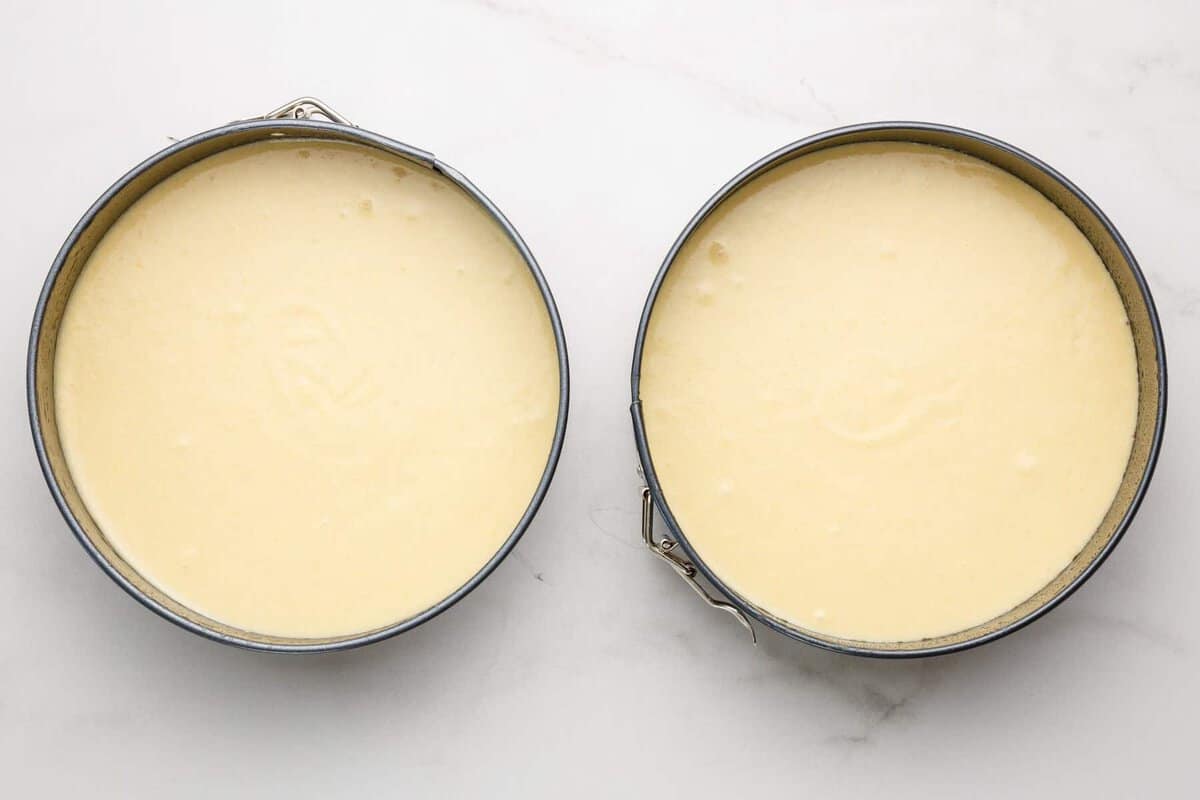
Step 7: Bake — and Know When Your Cake Is Done
Bake on the center rack, and resist opening the oven door for at least the first two-thirds of the bake time — the rush of cool air can make a rising cake sink. Most 8- or 9-inch layers take 25–35 minutes at 350°F, and a 9×13 usually takes 30–40 minutes, but always start checking a few minutes before the recipe says. Every oven bakes differently, and a cake can go from underdone to overbaked fast.
Here’s how to tell when a cake is done:
- The edges pull away slightly from the sides of the pan
- The top springs back when you press it lightly
- A toothpick inserted in the center comes out clean or with a few dry crumbs — wet batter means it needs a few more minutes
Step 8: Cool the Cake
Leave the cake in the pan for about 10 minutes, then turn it out onto a wire rack to cool completely. The rack lets air circulate so the bottom doesn’t steam itself soggy. Don’t frost until it’s fully cool — frosting melts on a warm cake.
One exception: angel food and sponge cakes should stay in the pan until completely cool, or they can collapse.
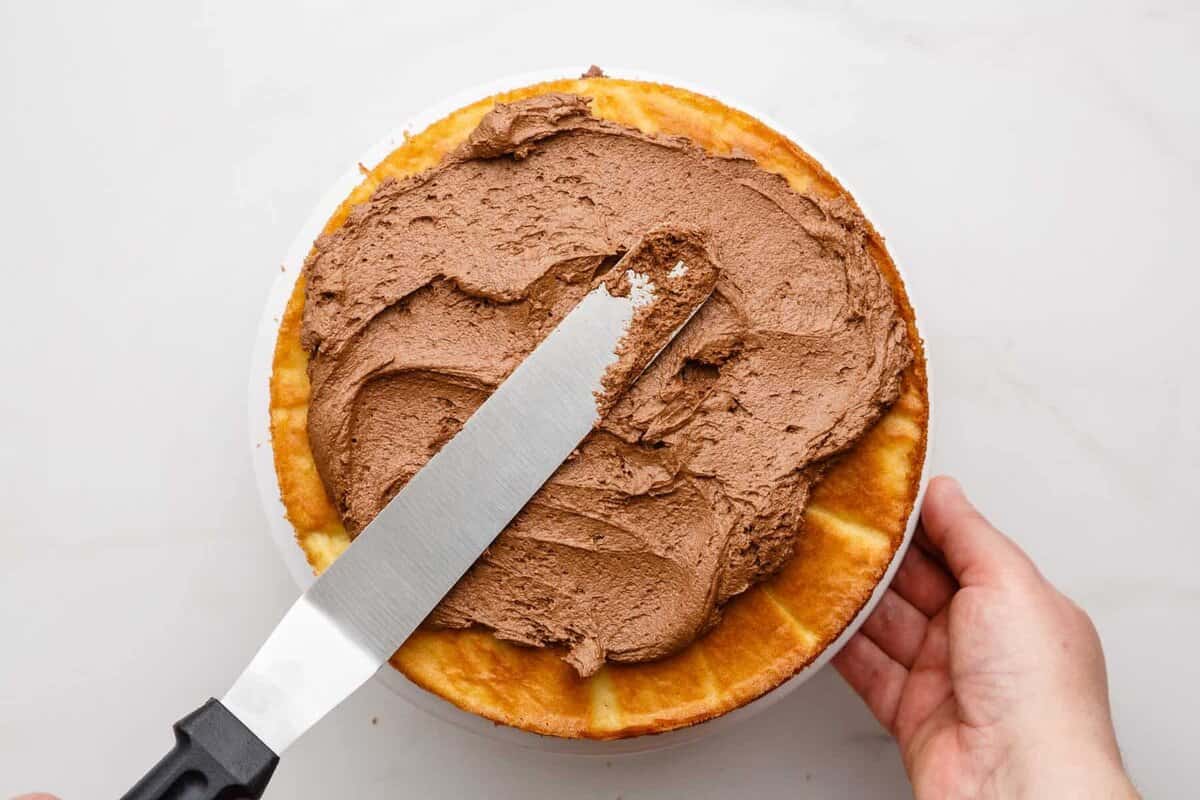
Step 9: Frost and Decorate
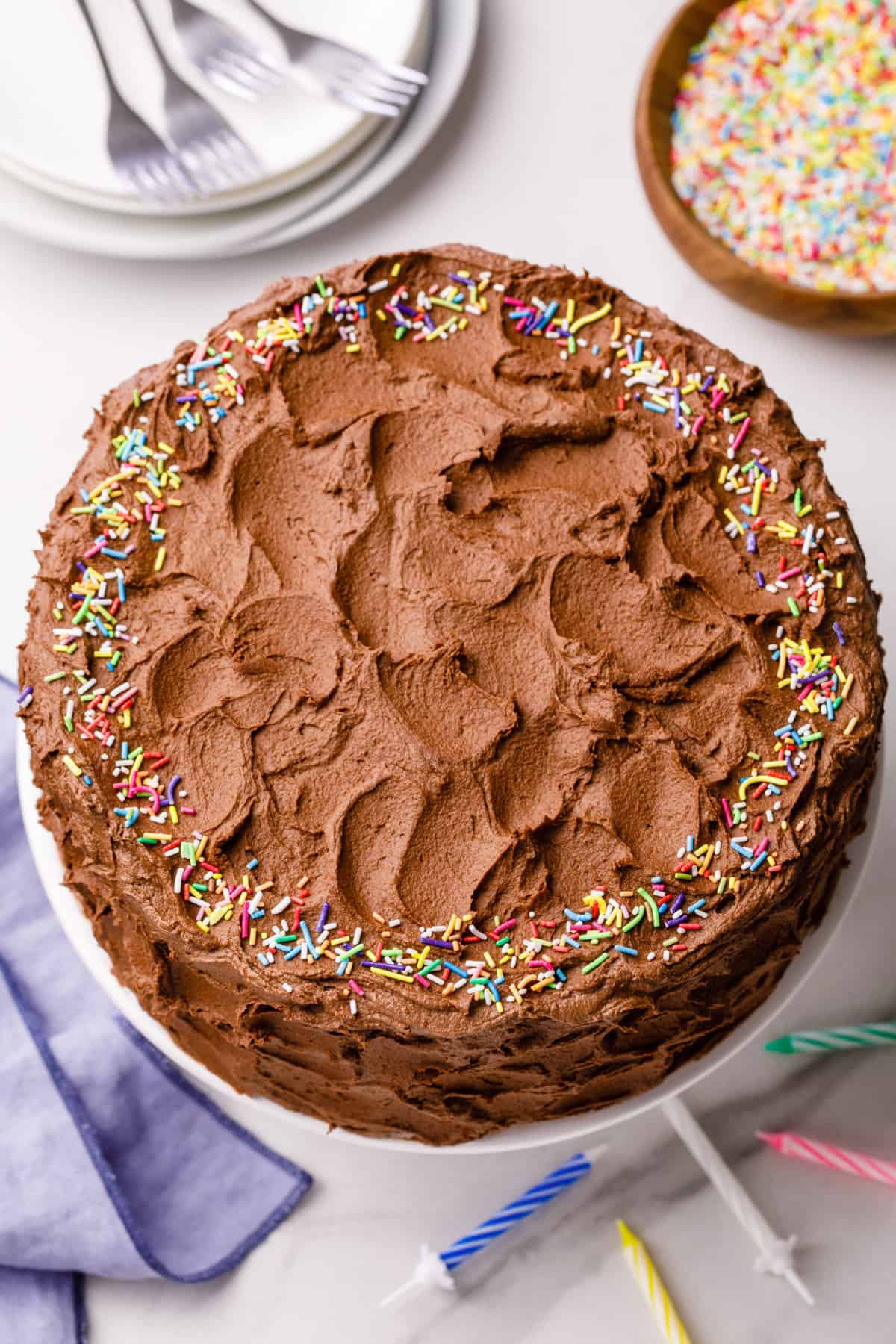
My top tip for finishing any cake: make your own buttercream frosting — it takes five minutes and makes all the difference over canned. When you’re ready to level up your finish, here are my picks for the best cake decorating tools.
Troubleshooting Common Cake Problems
- Why did my cake sink in the middle? Usually one of three things: the oven door was opened too early, the cake was underbaked, or the batter was overmixed. Check doneness with a toothpick before pulling it out.
- Why is my cake dry? Too much flour (scoop-packing is the usual culprit), overbaking, or overmixing. Measure by spooning and leveling, and start checking early.
- Why is my cake dense instead of fluffy? Cold ingredients or under-creamed butter and sugar. Give that creaming step its full 3–5 minutes with room-temperature butter.
- Why did my cake stick to the pan? Skipped or skimpy pan prep. Parchment on the bottom plus butter-and-flour on the sides releases cleanly every time.
Frequently Asked Questions
Most 8- or 9-inch round layers bake in 25–35 minutes at 350°F, and a 9×13 sheet cake takes about 30–40 minutes. Cupcakes are faster — usually 15–20 minutes. Always trust the toothpick test over the clock.
350°F is the standard for most butter cakes. Some recipes go lower (325°F) for deeper pans or bundt cakes to cook the center through without overbrowning the edges.
Both can be delicious! Baking a cake from scratch gives you the best flavor and texture control, but a doctored box mix is a great shortcut — here are my 10 tricks to make a box cake mix taste homemade.
Look for the edges pulling away from the pan and gently press the center — a done cake springs back instead of leaving a dent.
Start With These Easy Cake Recipes
Ready to put these steps to work? These are the cakes my family and readers make on repeat:
- 7Up Cake — an old-fashioned pound cake with the best crackly top
- Heath Bar Cake — chocolate, caramel, and toffee in one crowd-pleaser
- Chocolate Poke Cake — fudgy, easy, and impossible to mess up
- Ooey Gooey Butter Cake — the St. Louis classic
- Pumpkin Gooey Butter Cake — the fall version everyone asks for
Have a cake-baking tip of your own? Share it in the comments below!
More Baking Tips You’ll Love
Kitchen Tips
A Baker’s Guide to Egg Substitutes
Kitchen Tips
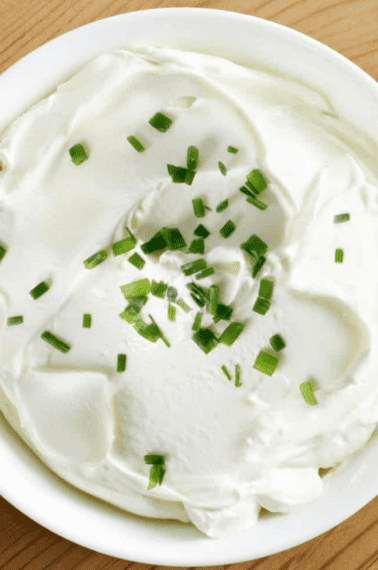
10 Best Sour Cream Substitutes
Kitchen Tips
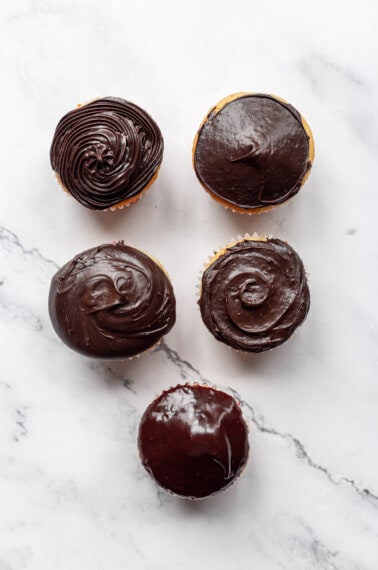
How to Frost Cupcakes Without a Piping Bag
Kitchen Tips
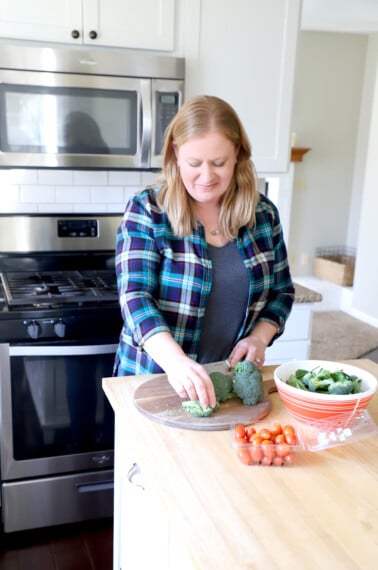
How to Follow a Recipe
💌 Love easy recipes? Join my newsletter and get my Top 10 Reader-Favorite Recipes eBook FREE! Sign up here.