
This post may contain affiliate links. Please read our disclosure policy.
Cake flour versus all purpose flour — what’s the real difference? In this post, you’ll learn how protein content affects texture, when to use each different type of flour, and how (and when) to substitute them in baking.
For more helpful kitchen tips, see my post on How to Clean a Cast Iron Pan and the The Best Way to Crack an Egg.
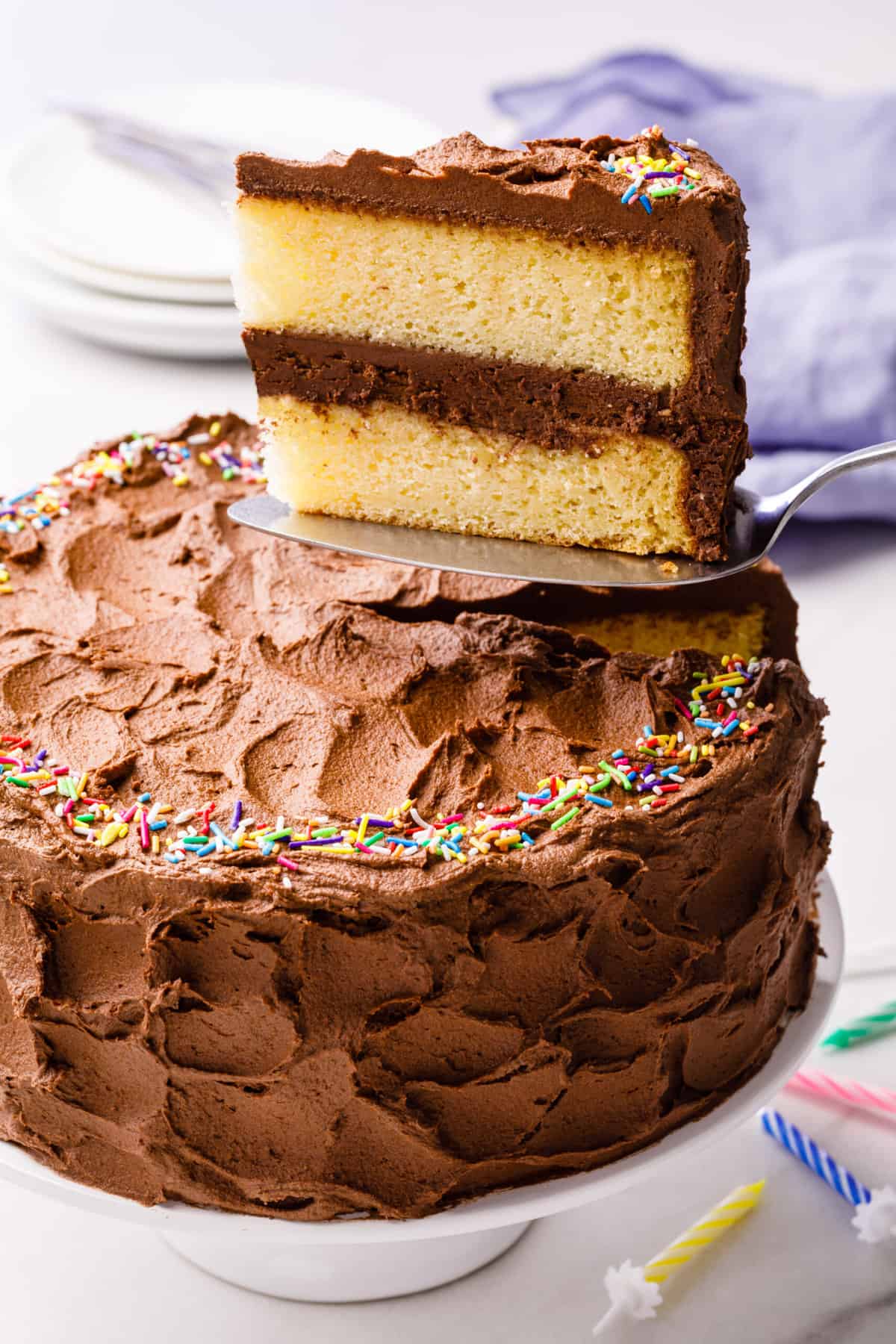
Understanding cake flour versus all-purpose flour.

If you’ve ever stood in the baking aisle wondering about cake flour compared to all purpose flour, you’re not alone. They look similar. They’re both made from wheat. So what’s the real difference?
The short answer? Protein content. But there’s more to it than that.
Whether you’re baking a birthday cake, whipping up cookies, or trying a new recipe, understanding which flour to use can completely change your results.
In this post, I’ll break it all down in simple, practical terms.
Cake Flour vs. All Purpose Flour
When comparing cake flour versus all purpose flour, the biggest difference is protein content — which directly affects gluten development.
- Cake flour: 5–7% protein
- All-purpose flour: 10–13% protein
More protein means more gluten. And more gluten means more structure and chew.
Less protein? Softer, lighter, more delicate baked goods.
That’s why cake flour produces tender cakes with a fine crumb, while all-purpose flour creates sturdier textures that work well for cookies, quick breads, and even some yeast breads.
Quick Comparison Chart
Here’s an easy side-by-side look:
Cake Flour
- Protein: 5–7%
- Texture: Very finely milled
- Wheat type: Soft wheat
- Results: Light, tender crumb
- Best for: Layer cakes, cupcakes, angel food cake, sponge cake
All-Purpose Flour
- Protein: 10–13%
- Texture: Medium grind
- Wheat type: Blend of hard + soft wheat
- Results: More structure and chew
- Best for: Cookies, muffins, quick breads, pancakes, many cakes
What Is Cake Flour?
Cake flour is a finely milled flour made from soft wheat. It has a lower protein content than other flours, which limits gluten development during mixing.
Less gluten means:
- A softer crumb
- A lighter texture
- More delicate structure
This is why recipes like angel food cake, chiffon cake, and tender layer cakes often call specifically for cake flour. It helps create that fluffy, melt-in-your-mouth texture.
Because it’s milled so finely, cake flour also absorbs liquid differently than all-purpose flour. That finer texture contributes to smoother batters and more even baking.
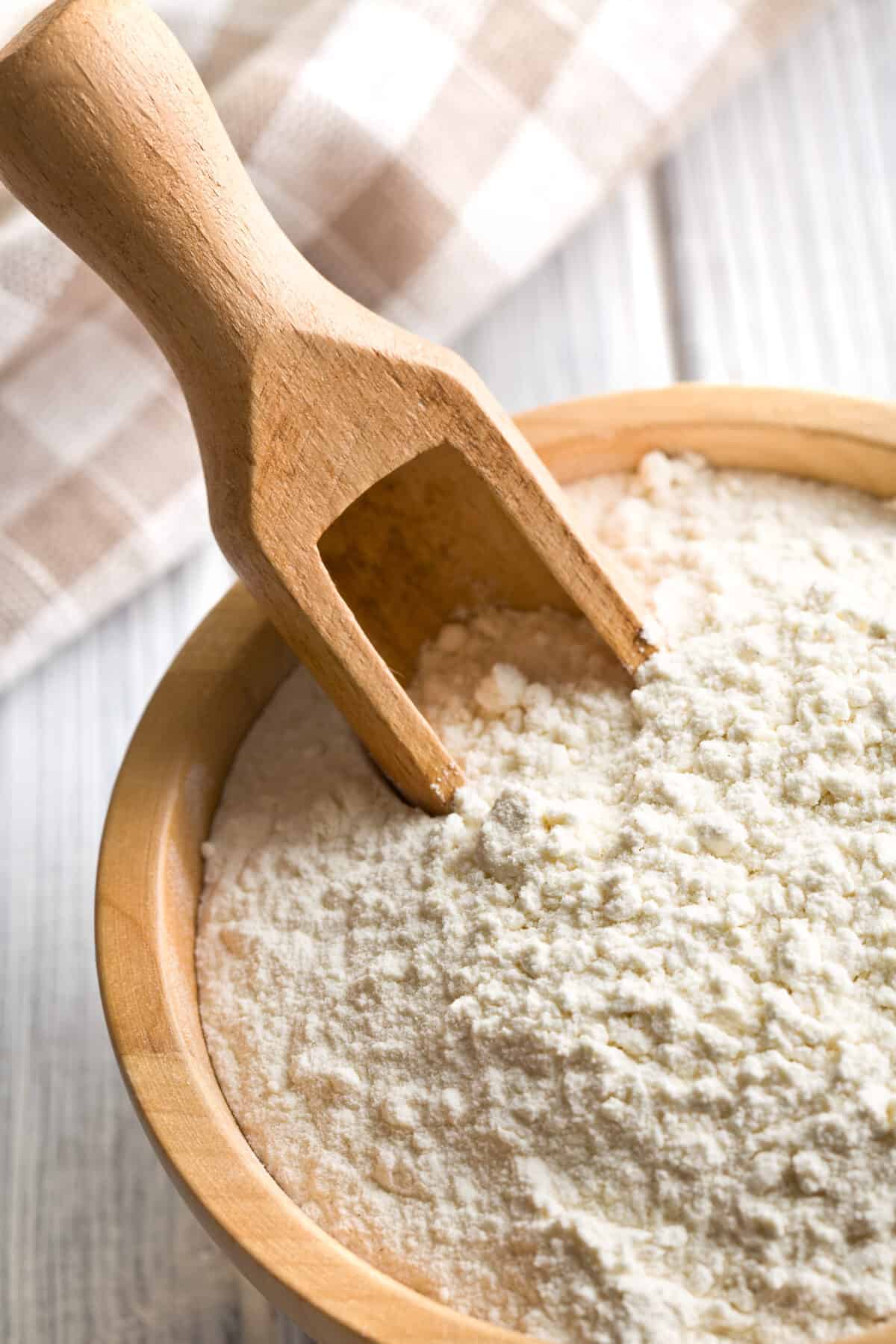
What Is All-Purpose Flour?
All-purpose flour is exactly what it sounds like — versatile.
It’s made from a blend of hard and soft wheat, giving it a moderate protein level. That balance makes it suitable for:
- Cookies
- Brownies
- Muffins
- Pancakes
- Quick breads
- Some yeast breads
- Cakes (though slightly denser than with cake flour)
If you only keep one flour in your pantry, this is the one to have.
Is Cake Flour the Same as All Purpose Flour?
No — cake flour is not the same as all-purpose flour.
They differ in protein content, texture, and how they behave in recipes. Swapping them without adjusting measurements can change the structure and texture of your baked goods.
That said, substitutions can work with a few small adjustments.
Can You Substitute All-Purpose Flour for Cake Flour?
Yes, in most cases you can substitute all-purpose flour for cake flour — especially in casual home baking.
However, your baked goods may be:
- Slightly denser
- Less delicate
- A bit more structured
If you want a closer match, you can mimic cake flour at home (more on that below).
Can You Substitute Cake Flour for All-Purpose Flour?
This is where you need to be careful. Because cake flour has less protein, using it in a recipe designed for all-purpose flour can result in:
- Fragile baked goods
- Crumbly texture
- Lack of structure
- Collapsing layers in cakes
It’s generally best to only use cake flour when a recipe specifically calls for it.

When To Use Each Flour
Understanding when to use each one makes baking much easier.
Use Cake Flour For:
- Angel food cake
- Sponge cake
- Chiffon cake
- Tender layer cakes
- Cupcakes
Use All-Purpose Flour For:
- Cookies
- Brownies
- Muffins
- Quick breads
- Pancakes
- Pie crust
- Yeast breads
If structure matters (like bread), you need more protein. If tenderness matters (like cake), you need less.
How to Make Your Own Cake Flour
If a recipe calls for cake flour and you don’t have any, you can make a simple substitute.
For every 1 cup of cake flour needed:
- Measure 1 cup of all-purpose flour.
- Remove 2 tablespoons of flour.
- Add 2 tablespoons of cornstarch.
- Whisk thoroughly to combine.
- Sift once or twice for best results.
The cornstarch lowers the overall protein content and helps mimic the softer texture of cake flour. This substitute works well in most cake recipes. (Here’s how to make self-rising flour.)
Popular Brands of Cake Flour
If you’d rather buy it, here are some common brands:
- Pillsbury Softasilk Cake Flour
- Swans Down Cake Flour
- King Arthur Cake Flour
- Bob’s Red Mill Fine Pastry Flour
- General Mills Purasnow Cake Flour
You’ll usually find them in the baking aisle near other specialty flours.
More Kitchen Tips
Kitchen Tips
How Many Cups In A Quart, Pint or Gallon?
Kitchen Tips
Baking Dish and Casserole Conversion Guide
Kitchen Tips
When to Use Salted vs. Unsalted Butter
Kitchen Tips
7 Things You Can Substitute for Eggs in Cake Mix
💌 Love easy recipes? Join my newsletter and get my Top 10 Reader-Favorite Recipes eBook FREE! Sign up here.










message beThank you for that because I was never aware of that. Not sure they even have that at my store but will definitely look the next time I visit the store.
Perfect. Love your site. Helpful hints and great recipes.
Thank you, Ruby! We’re so happy to have you here!